

The Santa Claus Rally isn’t just an American phenomenon—it’s a powerful lesson for smart investing in the Indian stock market.
Every December, one name dominates conversations across the world — Santa Claus.

But beyond red suits and gift bags, Santa represents something powerful: discipline, planning, consistency, and long-term thinking.
Interestingly, these are the same traits that define successful investors.
In Indian markets, December often brings discussions around the Santa Claus Rally, year-end portfolio rebalancing, tax planning, and fresh SIP goals. While markets may or may not rally every year, the lessons behind Santa’s approach remain timeless for investors.
Let’s decode what Santa Claus can teach Indian investors —
Lesson 1: Santa Plans All Year, Not in December
Santa doesn’t wake up in December and rush to deliver gifts. He plans months — even years — in advance.
Long-term wealth creation comes from systematic planning, not last-minute market timing.
Over the last 20 years, investors who stayed invested in the Nifty 50 for 10+ years experienced significantly smoother returns compared to those who entered and exited frequently.
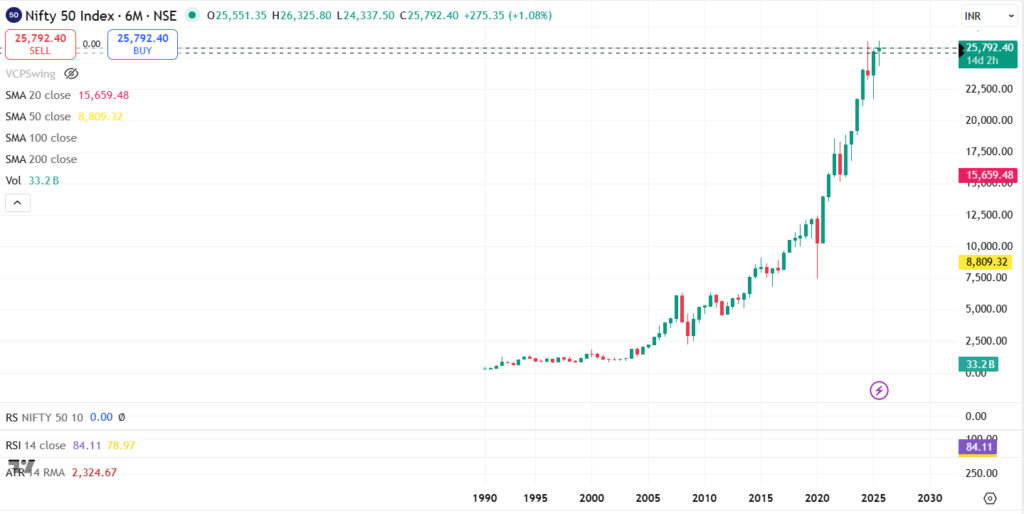
Even investors who started SIPs at market peaks (2008, 2017, 2021) benefited over time due to rupee-cost averaging.
👉 Key takeaway: Consistent investing beats perfect timing.
Lesson 2: Naughty or Nice = Risk Profiling Matters
Santa evaluates behaviour before deciding the gift.

Every investor must assess:
- Risk tolerance
- Investment horizon
- Income stability
- Financial goals
During the 2020 crash, equity-heavy portfolios fell over 35%, while balanced allocation portfolios saw far smaller drawdowns. Investors aligned with their risk profile stayed invested — others exited at the worst possible time.
👉 Key takeaway: Choose investments that let you sleep peacefully during volatility.
Lesson 3: Santa Never Relies on One Reindeer
Santa’s sleigh doesn’t depend on a single reindeer — diversification keeps the journey safe.

Diversification across asset classes reduces downside risk.
Market behaviour:
- During equity corrections, gold often acts as a hedge
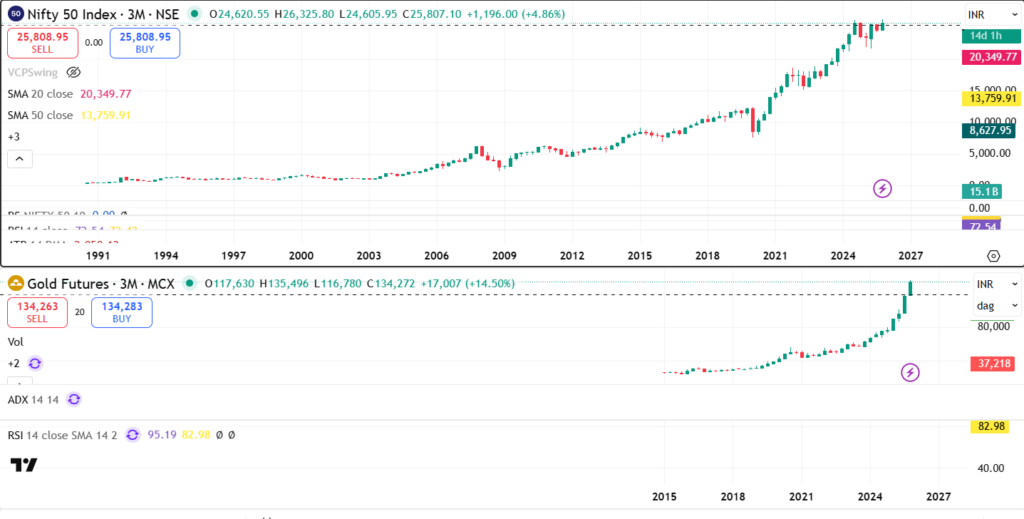
- Debt cushions portfolios during high-interest-rate phases
- Multi-asset portfolios have historically shown lower volatility with stable long-term returns
For example, portfolios combining equity + debt + gold experienced shallower declines during periods like 2011, 2018, and 2022.
👉 Key takeaway: Diversification isn’t about higher returns — it’s about survival and consistency.
Lesson 4: Santa Believes in Compounding
Santa delivers small gifts every year — and the joy compounds over time.

Compounding rewards patience, not speed.
A monthly SIP of ₹10,000 for 20 years at ~12% annualised growth turns into ₹1 crore+, while investing the same amount irregularly often results in far lower outcomes.
Markets reward time spent invested, not frequent switching.
👉 Key takeaway: Compounding works silently, but powerfully.
Lesson 5: Santa Delivers Even in Bad Weather
Snowstorms don’t stop Santa — discipline does the heavy lifting.
Markets will face:
- Rate hikes
- Global shocks
- Corrections and crashes
Every major correction — 2008, 2013, 2020 — was followed by recovery and new highs over time.
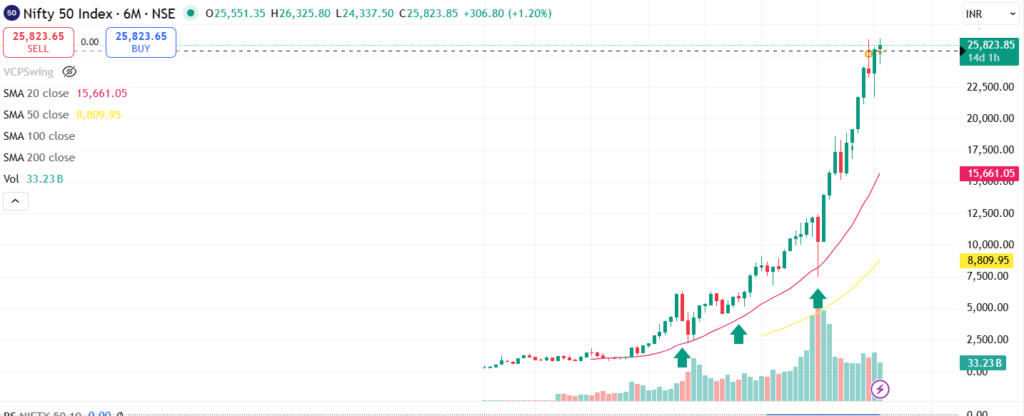
Investors who stayed invested recovered losses faster than those who exited and waited.
👉 Key takeaway: Volatility is temporary; discipline is permanent.
Lesson 6: Santa Rally Is a Bonus, Not a Strategy
Yes, markets sometimes rise at year-end — but not always.
While December has delivered positive returns in many years, there have been several instances where markets corrected instead.
Investors who waited “santa claus rally” often missed long-term compounding.
👉 Key takeaway: Invest based on goals, not calendar effects.
Lesson 7: Santa Delivers on Time Because He Follows a System
Santa succeeds because his process is rule-based, not emotional.
Successful investors follow:
- Asset allocation
- Periodic rebalancing
- Long-term discipline
Data shows portfolios that are rebalanced annually tend to control risk better and avoid emotional excesses during euphoric markets.
👉 Key takeaway: A simple system beats emotional decisions every time.
Conclusion: Be Your Own Santa This Year
Santa Claus doesn’t chase trends, panic in storms, or rely on luck. He plans early, stays disciplined, diversifies resources, and trusts the process.
This year, instead of waiting for Santa to bring returns:
- Start systematic investing
- Stay invested during volatility
- Trust compounding
- Focus on long-term goals
Because in investing — discipline delivers better gifts than luck.
FAQs
A Santa Claus Rally refers to the tendency of stock markets to rise during the last week of December and the first few trading days of January. While it has occurred in several years, it is not guaranteed and should not be the sole basis for investment decisions.
No. It is a seasonal observation, not a strategy. Long-term investing success depends more on asset allocation, discipline, and time in the market.
No. It is a seasonal observation, not a strategy. Long-term investing success depends more on asset allocation, discipline, and time in the market.
Diversification across equity, debt, and gold helps reduce portfolio volatility and cushions downside risk during market corrections.
Long-term investing allows compounding to work, smooths market volatility, and reduces the impact of short-term market noise.
“May your portfolio grow steadily, your risks stay balanced, and your returns compound beautifully. Wishing you a very Merry Christmas and a prosperous New Year.”
Disclaimer
This article is for educational purposes only and should not be considered investment advice. Mutual fund and market investments are subject to market risks. Please read all scheme-related documents carefully or consult a financial advisor before investing.



Leave a Reply